We facilitate the opening of bank accounts for your offshore structures through our network of consultants and agents in the United States. We also arrange the opening of trust accounts through insured attorneys, ensuring a high level of confidentiality.
Against the backdrop of growing concerns surrounding European banking systems — including developments in Cyprus and the Baltic states, as well as the freezing of accounts at a number of European banks pending verification of the source of funds — many people have come to realize that holding money in European bank accounts, as well as in other offshore bank accounts, may no longer provide the level of security they once expected.
In practice, during periods of global economic instability, depositors’ accounts at banks experiencing serious financial difficulties may be frozen on the grounds that the funds held in those accounts constitute investments — that is, they generate interest payments, which may further increase the banks’ financial obligations.
Because European banks may not always benefit from sufficient government support, the risk of account restrictions during periods of financial stress may increase. In addition, new legislative measures aimed at combating money laundering allow banks to impose restrictions while verifying the origin of funds.
As a result, some depositors holding significant balances in European bank accounts have found their accounts frozen and have subsequently been required to demonstrate that their funds were obtained through legitimate means.
Many offshore banks readily accept clients’ funds, yet depositors may have limited visibility into the financial strength of a particular institution or the parties responsible for its management. However, there is an established solution to this issue that has been used since the 18th century under principles derived from English property law: an attorney trust account or an escrow account.
Under the laws of the State of California, United States, a law firm must hold a valid license to practice law in order to hold client funds in a trust account. The system operates as follows: an attorney holds the client’s funds in trust and disburses those funds to the client, or for the client’s benefit, in accordance with the client’s instructions.
The attorney’s law firm maintains an account with a U.S. bank rated “AAA” — in our case, Bank of America. While funds are held in the trust account, they are not legally treated as ordinary bank deposits; instead, they remain the property of the law firm’s clients. Accordingly, in the event of a bank failure, the account is treated differently from the accounts of ordinary depositors.
The law firm then establishes a subaccount in the client’s name. The client may be a trust, an individual, or a company. This subaccount is assigned a specific name and account number. It is no longer treated as an ordinary bank account, but rather as a client trust account maintained by the law firm.
The authorized person managing the account — that is, you — enters into an agreement with the attorney containing instructions on how the funds are to be handled. These instructions may be provided by any convenient means, including email or other agreed communication channels. Each time funds are credited to or withdrawn from the account, the attorney receives instructions specifying where the funds should be sent or identifying the source from which they were received.
Billions of dollars in client funds are held in attorney trust accounts. In practice, such accounts are a fundamental mechanism used in property and other fiduciary transactions throughout the United States. An attorney’s conduct is governed by the applicable U.S. bar authorities and professional rules relating to the safekeeping and transfer of client property. These requirements are particularly strict when it comes to the custody of client funds.
Attorneys are strictly prohibited from using client funds for their own purposes or in any manner inconsistent with the terms of the governing agreement. In addition, the law firm that has worked with Vega Star Group for more than 20 years holds the appropriate licenses to provide these services and, at your request, may arrange insurance coverage for your capital in amounts ranging from $5 million to $100 million. This is intended to provide an additional layer of protection even in the highly unlikely event that an attorney fails to meet their professional obligations.
We also emphasize the high professional standards applicable to attorneys in the United States. Cases involving the unlawful withdrawal of funds from attorney trust accounts are considered extremely serious violations. The law firm working with Vega Star Group regularly holds up to $10 million in client funds in its trust accounts.
In addition, the U.S. legal profession maintains client protection funds designed to compensate clients who suffer losses as a result of dishonest conduct by attorneys. Such funds may provide an additional layer of protection in the unlikely event of professional misconduct. The risk of an attorney improperly dealing with your capital held in an escrow or trust account is intended to be minimized through strict professional obligations, regulatory oversight, and client-protection mechanisms.
To open an account with an “AAA”-rated bank, you will be required to undergo a strict banking compliance review, which may take several weeks. You may successfully complete this process; however, if you do not appear at the bank in person, or if the bank is not satisfied with a foreign national’s application to open such an account, it may delay the process or refuse to open the account altogether.
In addition, a BANK may freeze an account if it has concerns regarding the source of your funds, and whether the bank will accept that source cannot always be known in advance.
With an escrow account, the process is different. Responsibility for the proper handling of the funds rests with the lawyer/attorney, who is required to safeguard your assets. The account is administered within the legal and fiduciary framework applicable to attorney trust accounts rather than as an ordinary client bank account.
An escrow account can be opened in as little as 48 hours. The personal information of the beneficial owner is protected. In addition, under the principles of attorney-client confidentiality and applicable professional obligations, an attorney is generally required to protect information concerning the beneficiary and account owner, subject to applicable legal exceptions and lawful disclosure requirements.
This means that once you have successfully completed our compliance review and the lawful origin of your funds has been verified, the account can be structured to reduce the need for repeated onboarding procedures. For example, an account may be opened in the name of a trust while preserving the confidentiality of the beneficiary, who may nevertheless retain the rights to own and manage the account in accordance with the governing documents.
Not ideally suited for frequent trading, as each transaction requires a separate instruction to the attorney.
Higher cost compared with a standard bank account.
Cannot be managed online.
Credit cards are not available.
Security and Reliability of Funds Held in a U.S. Attorney Trust Account
The Attorney Trust Account places funds only with “AAA”-rated banks, allowing us to provide what we consider to be the highest level of reliability currently available within the global banking system. In certain cases, at the client’s request, our company may arrange for the funds to be held with any U.S. bank specified by the client, for example, where the client has particular preferences regarding the placement of their assets.
Funds held in an Attorney Trust Account are protected under U.S. law and are subject to oversight by the State Bar of California: http://www.calbar.ca.gov/
In the event of the sudden death or incapacity of the attorney responsible for your trust account, the appropriate state authorities, in accordance with applicable law, will appoint a successor to ensure continuity in the administration of the account. The relevant regulatory framework governing this procedure can be reviewed here.
This practice has been successfully used in the United States for many years.
All information concerning the client, their accounts, business activities, personal affairs, and any other information in the attorney’s possession is protected by U.S. laws and professional rules governing attorney-client confidentiality. This means that such information is not subject to disclosure except as permitted or required by applicable law.
Even if a U.S. court were, through a lawful procedure, to require an attorney to provide testimony in a matter involving a client, the attorney would disclose only such information as may lawfully be provided without violating the attorney’s professional duty of confidentiality.
A breach of attorney-client confidentiality may have serious professional and legal consequences for a U.S. attorney, and no court or other government authority may lawfully compel an attorney to violate applicable rules of professional conduct.
An exception may apply where a client’s actions could result in physical harm, bodily injury, or death.
The regulatory framework governing confidentiality in the attorney-client relationship can be reviewed here.








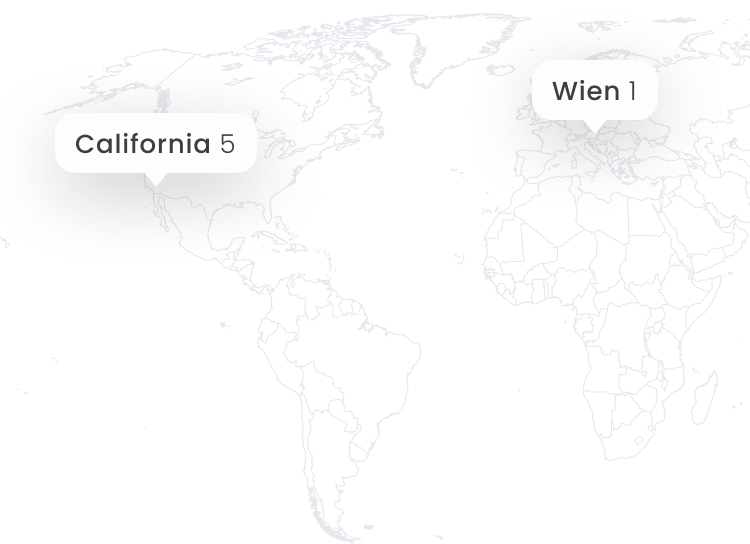
Vega Star Group has 6 offices worldwide: 5 in California and 1 in Vienna.